
When to Clean Commercial Solar Panels: Watch for a 10% Output Drop
· Exterior Drone Washing

Most solar arrays need cleaning once or twice a year, but the real trigger is your production data: when output drops about 10% below expected generation after you account for weather, it’s time to clean. Dusty or coastal sites may need more frequent cleaning. For large or hard-to-reach commercial arrays, a drone-based cleaning service handles the job without scaffolding or rooftop access.
TL;DR:
- Use spring and fall cleanings as a starting point, but inspect more often near dust, salt, wildfire ash, pollen blooms, or bird activity.
- Dirty panels can lose 5% to 25% of output; compare production with weather adjusted expectations and inspect visible buildup after dry spells or local events.
- Clean cool panels in early morning, late evening, or cloudy weather; avoid midday rinsing, pressure washers, abrasive pads, harsh chemicals, and scraping snow.
- Hire an insured professional for steep roofs, tall buildings, commercial arrays, heavy residue, or warranty rules; request shutdown procedures and documented results.
- For commercial arrays, clean when the wash costs less than the production value recovered; drone access can avoid scaffolding or work at height.
Table of Contents
- A cleaning schedule you can start with today
- The best seasons to clean, plus events that break the routine
- When during the day you should actually clean
- Reading your production data and panels for cleaning signs
- Deciding when to call in a professional crew
- How drone-based cleaning handles large and tall arrays
- Keeping cleaning water and chemicals out of the environment
- Why monitoring beats habit for deciding when to clean
- Get a professional drone cleaning quote for your solar array
- FAQ
- Sources
A cleaning schedule you can start with today
A good starting point depends on where your panels sit and what lands on them. EnergySage recommends once or twice a year as a sensible baseline, with dry, dusty sites needing attention roughly every six months.
From there, adjust for your specific location:
- Desert, high-dust, or heavy-salt sites may need more frequent cleaning.
- Many suburban and temperate climates do well with twice-yearly cleanings, typically spring and fall.
- Rainy climates can often get by with one annual cleaning, plus spot-cleaning for bird droppings or sticky sap.
- Panel tilt matters: flatter arrays collect more dust and shed rain less effectively than steeply angled ones.
A few other factors can push your frequency up or down. Nearby trees mean more pollen and leaf debris. Frequent bird perching calls for more spot-checks. Agricultural operations and wildfire season both add ash and particulate buildup that plain rain won’t rinse away. Some newer panels come with hydrophobic coatings that shed water and dust more efficiently, which can stretch out your cleaning interval.
Pro Tip: Keep a simple log of your cleaning dates alongside your monthly output numbers. Over time, you’ll have a clearer picture of your actual soiling pattern instead of guessing.
The best seasons to clean, plus events that break the routine
Spring and fall earn their reputation as the priority windows for a reason. A spring cleaning clears away pollen and the grime that built up over winter, right before your system heads into peak summer production. A fall cleaning removes accumulated summer dust and falling leaves, which matters more as the sun sits lower and you need every bit of available output.
Outside that routine, certain events justify an off-schedule cleaning regardless of the calendar. A regional dust storm, a nearby wildfire sending ash your way, a heavy pollen bloom, or a sudden spike in bird activity near your array are all good reasons to clean sooner rather than wait for your next scheduled pass.
Winter deserves its own note: don’t scrape snow off your panels. Scraping risks scratching the glass or damaging seals. Let it melt and slide off naturally, which most tilted arrays do fairly quickly once the sun comes back out.
When during the day you should actually clean
Timing within the day matters almost as much as the season. Cold water hitting hot glass can cause thermal stress, so the goal is simple: clean when the panels themselves are cool.
- Early morning or late evening both work well, before the sun has heated the glass.
- An overcast day is also a good window, since panel temperatures stay lower throughout.
- Avoid hosing down panels in full midday sun, which risks thermal shock to the glass.
- Skip cleaning right before forecast rain or an expected dust event, since either one undoes the work within a day or two.
Checking a short-range forecast before you schedule a cleaning, whether it’s a DIY job or a professional visit, saves you from redoing the work unnecessarily.
Reading your production data and panels for cleaning signs
The most reliable signal isn’t a date on a calendar, it’s your system’s own output. Visual inspection and output monitoring are the practical triggers for cleaning, rather than a fixed schedule alone.
Visual cues back up what the data tells you. A visible dust film, caked pollen, bird droppings, salt haze near coastal sites, or soot from wildfire smoke often correlate with the larger output losses, since dirty panels can lose anywhere from 5% to 25% of their output depending on how heavy the buildup is. A sudden drop after a dry spell, a regional dust event, or soiling that’s concentrated on a handful of panels rather than spread evenly across the array are all short-term signals worth a closer look.

Deciding when to call in a professional crew
Some situations call for a professional rather than a DIY approach. Steep or unsafe roof pitches, multi-story buildings, large commercial or solar farm arrays, and heavy soiling from salt spray or wildfire ash all raise the risk and difficulty of a safe cleaning.
- Hire a crew when roof access would require a ladder on a steep slope or a multi-story reach.
- Bring in professionals for commercial-scale or solar farm cleaning, where specific array requirements and access logistics apply.
- Consider professional service when soiling is heavy enough that a garden hose and soft brush won’t fully restore output.
- Lean on a pro when warranty terms specify approved cleaning methods and you want documentation on file.
For commercial operators, the decision often comes down to economics: the IEA-PVPS framework treats cleaning as an optimization problem, where the cost of a wash should stay below the value of the production you’d otherwise lose to soiling. A qualified crew should carry insurance, follow a documented shutdown procedure before starting, and provide before-and-after photos or production data so you can confirm the job restored expected output. For commercial property managers coordinating both roof and panel upkeep, a maintenance checklist built for property managers can help keep both tasks on the same schedule.
How drone-based cleaning handles large and tall arrays
Drone cleaning has become a practical option for arrays that are large, tall, or awkward to reach safely on foot. Instead of scaffolding, lifts, or rope access, an operator flies an industrial drone fitted with a soft-wash or pure-water system low over the array, applying a controlled, low-pressure spray that lifts dust, pollen, and film without scrubbing the glass.
Pure-water systems are worth noting specifically: deionized water leaves no mineral spots or streaking behind, which matters for keeping the surface clear without an extra wiping pass. The equipment typically includes a spray bar or nozzle array mounted beneath the drone, a water reservoir or supply line, and a flight pattern programmed to cover each row evenly.
For elevated rooftop commercial arrays, this method may avoid the setup time and worker-at-height risk that come with scaffolding or rope crews. Jobs that might take considerably longer with traditional access methods may be completed more quickly, since the drone can cover sections of an array without repositioning ladders or lifts. For solar farms spread across acres rather than a single rooftop, the same logic applies at scale: covering rows of ground-mounted panels without walking the array or driving equipment between rows.
Keeping cleaning water and chemicals out of the environment
Water use and runoff deserve a thought before any cleaning job, residential or commercial. A standard garden-hose rinse for a home system uses a modest amount of water, but larger arrays and solar farms scale that up considerably, which is part of why some operators choose low-water or waterless brush systems for frequent touch-ups between full washes.
Deionized or pure water is worth favoring over tap water specifically because it evaporates without leaving mineral spots, which means fewer repeat passes and less total water used over a year. When soap is necessary for stubborn residue, a mild, biodegradable formula limits what runs off into surrounding soil or stormwater drains, compared with harsher degreasers or ammonia-based glass cleaners.
Runoff matters most on ground-mounted arrays and solar farms sited near natural drainage, where cleaning chemicals can reach soil or waterways if not managed carefully. Choosing plain water or a biodegradable soap, and avoiding pressure washers that can spread chemical runoff further than intended, keeps the environmental footprint of routine maintenance small. For commercial operators managing recurring cleanings across a large footprint, water-efficient methods also tend to lower operating costs over time, since less water hauled or metered to a remote site means lower costs per cleaning cycle.

Why monitoring beats habit for deciding when to clean
Most guidance defaults to a calendar: clean twice a year and move on. That advice isn’t wrong, but it treats every site the same, and soiling doesn’t work that way. A rooftop near a construction site or a solar farm bordering a gravel road loses output on a completely different timeline than a suburban home a mile from the coast.
What actually determines when cleaning pays off is the gap between expected output and real output. Chase that number instead of a date, and you’ll clean less often in rainy months and more often during pollen season or after a dry stretch, which is a better use of time and money than guessing. Drone-based access changes the calculation further for tall or hard-to-reach arrays, since it removes the labor and safety cost that used to make frequent cleaning impractical.
— Eliot
Get a professional drone cleaning quote for your solar array
We handle solar panel cleaning for commercial properties across the United States using drones fitted with soft-wash and pure-water systems, which may avoid the need for scaffolding, lifts, or rope crews climbing your array. That matters for elevated rooftop systems, multi-story buildings, and solar farms where traditional access methods can cost more and take longer.
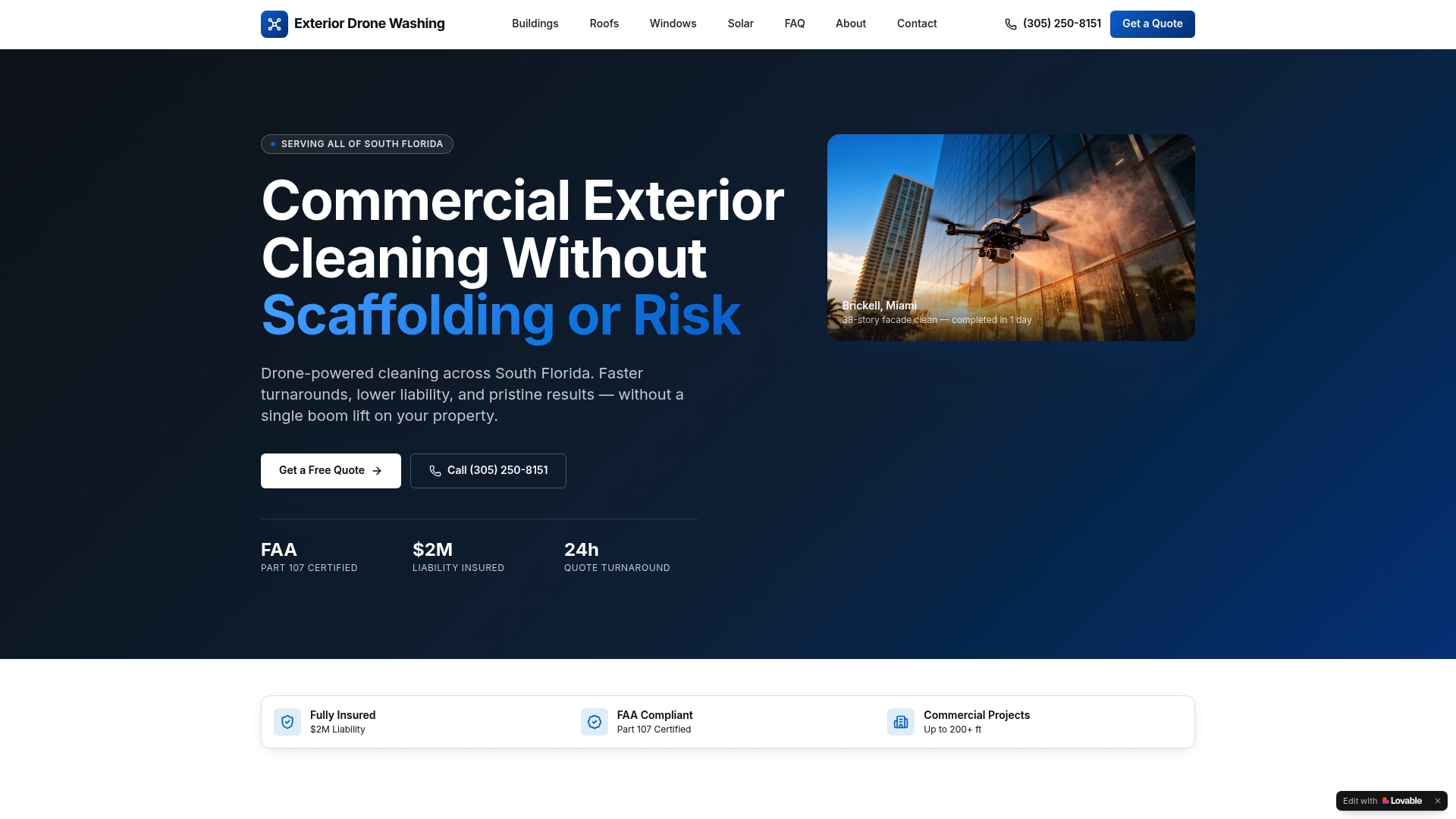
We clean arrays for commercial properties, from rooftop systems to ground-mounted sites. If your production numbers are trending down and your site is hard to access safely, request a quote through our commercial solar panel cleaning page and we’ll scope the job for your array.
FAQ
What is the average lifespan of a solar panel?
Most residential and commercial solar panels are built to perform for around 25 to 30 years, with output gradually declining over that span rather than failing outright. Regular cleaning and monitoring help you get closer to a panel’s full expected output throughout that lifespan.
How often should I clean my solar panels?
A reasonable baseline is once or twice a year, commonly in spring and fall, with dustier or coastal sites needing more frequent cleaning.
Should I clean my solar panels myself or hire a professional?
A ground-level home system with light soiling is often manageable with a garden hose and soft brush, following basic shutdown and safety steps. Steep roofs, tall commercial arrays, heavy soiling, or warranty requirements around approved cleaning methods are good reasons to bring in an insured professional crew instead.