
Property Managers: Drone Window Cleaning After Construction
· Exterior Drone Washing

Post-construction glass usually needs restoration cleaning, not a routine wash. Bonded residue like paint overspray, silicone, and adhesive labels resists standard squeegee-and-detergent methods and can scratch glass if handled wrong. As a rule of thumb, heavy bonded debris or high-access glass calls for a specialist; light dust and a few stray stickers may be safe for a cautious in-house crew. Either way, document the glass condition and confirm the glass type before anyone touches it with a blade.
TL;DR:
- Photograph existing conditions and identify the glass type before cleaning, because the wrong scraper or solvent can damage tempered or coated panes.
- Remove loose dust with vacuuming, soft brushing, and a low pressure rinse before using approved solvents or nonmetallic scrapers on bonded residue.
- On long projects, schedule interim cleanings every few weeks because residue left for months bonds more tightly and raises the risk of irreversible damage.
- For elevated work, verify fall protection, engineered stabilization, training records, inspections, and insurance; suspended platforms require compliant rigging and engineered anchor points.
- Expect post construction bids to exceed routine washing, and ask contractors to itemize setup, masking, specialty products, debris disposal, access, and repeat passes.
Table of Contents
- What Does Post-Construction Window Cleaning Actually Cover?
- Step-by-Step Process for Safe Post-Construction Window Cleaning
- Safety and Regulatory Baseline for Elevated Window Cleaning
- Why Post-Construction Jobs Cost More and How to Read an Estimate
- Hiring a Professional vs. Cleaning In-House: A Decision Checklist
- Drone-Based Window Cleaning: A Lower-Disruption Option for Many Projects
- Three Priorities Worth Enforcing After Construction
- How Exterior Drone Washing Helps With Post-Construction Window Cleaning
- FAQ
- Sources
What Does Post-Construction Window Cleaning Actually Cover?
Construction and renovation work leaves glass coated in material that routine cleaning was never designed to remove. A typical post-construction job deals with:
- Drywall dust and joint compound residue baked onto the glass surface
- Paint overspray from nearby finishing work
- Silicone, caulk, and sealant drips along frames and edges
- Stickers, labels, and adhesive residue from manufacturer packaging
- Concrete and grout splatter from masonry or tile work nearby
The glass itself matters as much as the dirt on it. Tempered, low-e, and laminated glass each respond differently to heat, pressure, and abrasion, and low-e coatings in particular can be damaged by the wrong solvent or scraper. A crew that doesn’t verify glass type before starting risks turning a cleaning job into a glass replacement bill.
This is why standard squeegee-and-detergent cleaning usually fails here. Routine cleaning assumes loose dirt and film, something water and a rubber blade can lift in one pass. Bonded construction residue is mechanically attached to the surface, and dissolving or lifting it without scratching the glass requires different tools entirely.

Step-by-Step Process for Safe Post-Construction Window Cleaning
A reliable post-construction cleaning job follows a sequence, not a single pass with a squeegee. Whether you’re supervising an in-house team or vetting a contractor’s bid, this is the order that protects the glass and the budget.
- Inspect and document first. Walk the site, photograph existing condition, and identify glass type and coatings before any product touches the surface.
- Protect the surroundings. Mask adjacent finishes, frames, and sills, and set up containment for runoff or debris.
- Remove loose debris. Vacuum dust, use soft brushing, and rinse at low pressure to clear anything not yet bonded to the glass.
- Wash and rinse with clean water. Deionized or pure water through water-fed poles, finished with a careful squeegee sequence, reduces streaking and mineral spotting;
- Inspect again and touch up. Check for missed spots, residual haze, or etching before signing off, and flag anything that needs a second pass.
Pro Tip: On long builds, schedule interim cleanings every few weeks rather than waiting for one final push. Residue that sits for months bonds harder and raises the odds of permanent etching.
A partner guide on post-construction window cleaning steps walks through similar tool and sequence choices in more detail, useful if your facility team is building its own checklist rather than hiring out the work.
Joint guidance from the window cleaning and glass industries notes that many bonded construction residues require non-routine techniques, sometimes including careful razor work or chemical restoration when glass was left unprotected during construction. That same guidance points out that multiple lighter cleanings during a build reduce the odds of irreversible damage compared with one aggressive restoration pass at the end.
Safety and Regulatory Baseline for Elevated Window Cleaning
Any job involving elevated glass brings safety rules into the picture, and property managers are the ones who should be asking contractors to prove compliance, not assuming it.
OSHA’s powered platform standard, 29 CFR 1910.66, applies to powered platform installations used for building maintenance, including window cleaning, and requires engineered stabilization and fall protection for anyone working on those platforms. Key points to verify in a contractor’s safety plan include:
- Fall arrest systems in place and inspected before use
- Engineered stabilization components appropriate to the building and platform type
- Registered-engineer sign-off for custom or unusual rigging setups
- Current training records and equipment inspection logs
- Certificates of insurance covering the scope of elevated work
Falls remain one of the most consistently cited hazards in construction and building maintenance work, and NIOSH and CDC guidance recommends fall-prevention protocols that property managers should confirm contractors actually follow, not just claim on paper.
Expectations scale with building height and platform type. A low-rise job with a ladder and hand tools carries different documentation needs than a high-rise project using a suspended platform, where engineered anchor points and OSHA-compliant rigging become mandatory rather than optional.
Why Post-Construction Jobs Cost More and How to Read an Estimate
Post-construction cleaning costs more than routine window washing, and the line items in a bid explain why. The main cost drivers are:
- Severity and type of bonded debris on the glass
- Access requirements: ladders, lifts, suspended platforms, or drones
- Glass layout, panel count, and coatings that require gentler handling
- Labor hours needed for careful, multi-step residue removal
- Number of cleaning passes required to reach a finished result
Pricing shapes vary. Some contractors quote per pane, others by square footage, and larger jobs often come as a project estimate after a site walk. Across the industry, post-construction cleaning is widely described as costing more than standard cleaning because of the extra labor, specialty materials, and safety equipment involved, so budgeting with a meaningful premium built in is reasonable.
A clear estimate should itemize mobilization and setup, protective masking, specialty solvents or restoration steps, debris disposal, and any staged or repeat passes for long builds. If a bid skips these details, ask for them before signing. A short site walk before the quote is the easiest way to avoid scope surprises once the crew is on site.
Hiring a Professional vs. Cleaning In-House: A Decision Checklist
The right call depends on debris severity, access height, and how much risk you’re willing to carry.
- Check the debris type. Light dust and a handful of labels on ground-floor glass may be safe for an in-house crew with the right non-abrasive tools.
- Check the access height. Anything beyond a standard ladder, or any job touching tempered or coated glass, generally calls for a specialist with proper rigging and training.
- Check the paper trail. Ask contractors how they verify glass type, what methods they use on stubborn residue, and whether they carry insurance covering elevated work.
- Check for documentation. Request before-and-after photos and a written method statement as part of the bid, not as an afterthought.
- Check the schedule. On multi-month builds, push for interim cleanings rather than one end-of-project restoration job, since early passes limit how much residue ever bonds to the glass.
Liability sits at the center of this decision. A scratched tempered pane or a voided warranty costs far more than the cleaning job itself, so the safer default on anything beyond light, low-access debris is a specialist with documented methods and insurance in hand.
Drone-Based Window Cleaning: A Lower-Disruption Option for Many Projects
Drone cleaning has become a practical option for commercial façades and high-access glass, particularly on buildings where scaffolding or lift access would slow down an active property. industrial drones flown by FAA Part 107 certified pilots equipped with soft-wash systems and deionized water can reach facades and windows well above standard ladder or lift range without rigging scaffolding or shutting down walkways below.
The operational upside shows up in a few places:
- Shorter project timelines compared with scaffold or rope-access setups
- Less disruption to tenants, traffic, and building operations during cleaning
- Documented before-and-after imagery as part of the standard workflow
- Reduced need for workers stationed at height on the glass itself
Drone cleaning fits especially well on mid-rise and high-rise commercial buildings, condos, and office towers where tenant disruption and project speed matter. Traditional rope or lift access still has a place on jobs with heavily bonded residue needing hands-on scraping work, or on facades with unusual geometry that a drone can’t safely approach.
Pro Tip: Before hiring any drone contractor, ask for proof of FAA compliance, current insurance, a written method statement, and references from comparable commercial projects.
Three Priorities Worth Enforcing After Construction
If I had to narrow post-construction cleaning down to a short list, it would be this: require proof of safety compliance before anyone goes up, not after. Document glass condition with photos before and after the job, so disputes over pre-existing damage never come down to memory. And push for staged cleanings on long builds instead of one late, aggressive restoration pass. Residue that sits for months bonds harder and raises the odds of damage that no amount of skilled scraping can fully undo.
— Eliot
How Exterior Drone Washing Helps With Post-Construction Window Cleaning
We clean building facades, high-rise glass, roofs, and solar arrays using industrial drones flown by FAA Part 107 certified pilots with soft-wash and deionized water systems, reaching glass up to 320 feet without scaffolding or rope access. This suits the final wash on condo towers and office buildings once bonded residue has been removed by hand.
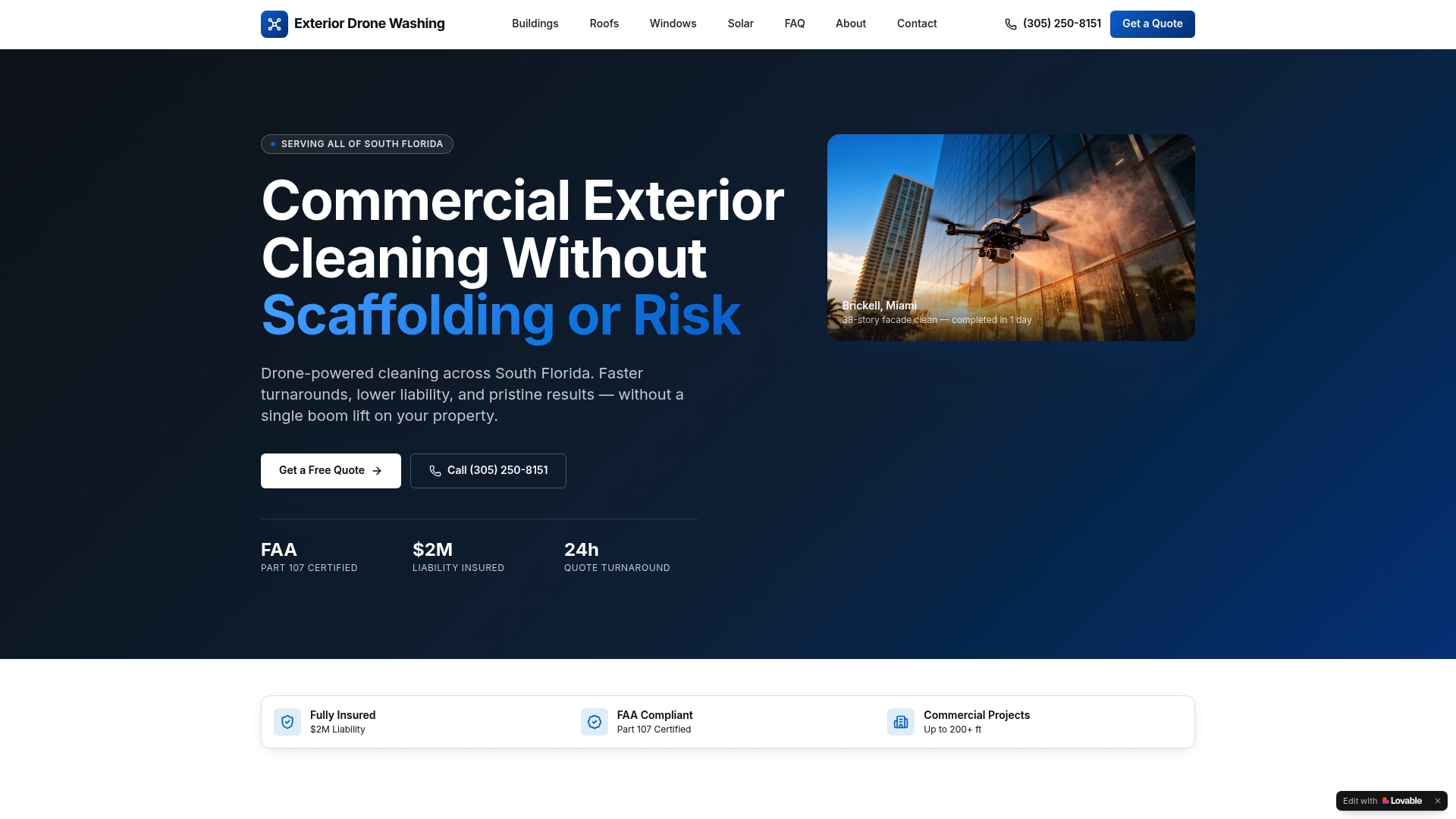
Booking starts with a site walk to assess debris severity, glass type, and access needs before quoting. From there, clients receive compliance documentation, a clear timeline, and pricing details before the crew arrives. For buildings dealing with post-construction buildup on high or hard-to-reach glass, our high-rise window cleaning services page outlines what a typical project looks like and how to request a quote.
FAQ
What is the average price to have your windows cleaned?
Pricing depends heavily on access, glass count, and whether debris is loose dirt or bonded construction residue, so there’s no single universal rate. Post-construction cleaning in particular tends to cost more than routine washing because of the extra labor, protective setup, and specialty materials involved, and getting a site-specific quote is the most reliable way to budget.
What does post-construction cleaning mean?
Post-construction cleaning refers to removing bonded residues like paint overspray, drywall dust, caulk, and adhesive labels left behind after a building or renovation project. It differs from routine cleaning because these residues are mechanically attached to surfaces and require non-routine techniques such as approved solvents and non-metallic scrapers, as outlined in the glass surface maintenance matrix.
Is professional window cleaning worth it?
For jobs involving elevated access, tempered or coated glass, or heavily bonded construction residue, professional cleaning reduces the risk of scratches, glass damage, and safety violations that can cost far more than the service itself. For light, ground-floor debris, a careful in-house team with the right non-abrasive tools may handle the job safely.
How do you clean up post-construction dust?
Start with vacuuming and soft brushing to remove loose dust before it has a chance to bond with any remaining moisture or residue on the glass. Follow with a low-pressure rinse, and only move to solvents or abrasive methods if dust has already bonded to the surface, checking glass type first to avoid damage.