
3 LEED Exterior Cleaning Moves That Prevent Runoff for Property Managers
· Exterior Drone Washing

Meeting LEED exterior cleaning standards means pairing a written site management policy with certified products and controlled wash water, not just picking a gentler soap. LEED v5 O+M ties facade, roof, and pavement cleaning to specific site management requirements, while EPA rules govern what can legally leave the site in runoff. Start now with three moves: adopt a written cleaning policy naming responsible staff, switch to Green Seal or EPA Safer Choice products, and set up wash-water containment before your next job.
TL;DR:
- LEED v5 requires a written site management policy that includes exterior cleaning responsibilities, performance standards, and ongoing monitoring.
- Approved products must be certified by ecolabels like Green Seal GS-37/GS-40, UL EcoLogo, or EPA Safer Choice, with purchase records demonstrating spending thresholds.
- Wash water containing chemicals must be contained, filtered, or treated onsite to prevent stormwater runoff violations, with containment steps documented in the SWPPP.
- Regular inspections, logs, and vendor certifications are necessary to maintain compliance and ensure LEED credit approval during reviews.
- Drone and ionized-water cleaning methods can simplify compliance by reducing chemical use and wastewater discharge concerns, supporting faster, safer exterior cleaning projects.
Table of Contents
- What LEED v5 requires for exterior cleaning
- Approved ecolabels and procurement rules
- Regulatory constraints and wash-water management
- How to build the site management and green cleaning policy reviewers expect
- Vendor certification, verification, and what auditors look for
- Operational controls and tracking for ongoing compliance
- Practitioner perspective: low-impact methods and a compliant drone option
- What the LEED cleaning rules get wrong in practice
- How Exterior Drone Washing can support LEED-compliant exterior cleaning
- Sources
- FAQ
What LEED v5 requires for exterior cleaning
LEED v5 O+M builds a Site Management Policy prerequisite that explicitly lists exterior cleaning, along with roof and pavement maintenance, as operations a building must govern under a written plan. The LEED v5 O+M rating system expects that policy to name responsible parties, set performance standards, and monitor results over time. It does not just state good intentions.
Exterior cleaning also feeds into green cleaning credits, where points depend on the products, equipment, and procedures a building uses across its cleaning program. Reviewers want the same paper trail every time: a policy document, the names of staff or vendors who execute it, and records showing the work happened on schedule. A verbal understanding with a janitorial contractor will not survive a LEED audit. The documentation is the credit; without it, even a spotless building scores nothing.

Approved ecolabels and procurement rules
LEED does not leave product selection to interpretation. It points to specific third-party ecolabels, and your procurement records need to show you actually bought from that list.
- Green Seal GS-37 and GS-40 cover general-purpose and floor-care cleaning products, and Green Seal notes that LEED v5 rewards projects using its certified products and certified cleaning services.
- UL EcoLogo and EPA Safer Choice are accepted alternatives, and the EPA maintains searchable product lists that make it easy to confirm a candidate product qualifies before you order it.
- Ionized or pure-water devices can count if a vendor can supply third-party performance verification showing equivalent cleaning results without chemical additives, a detail worth confirming in writing before a contract is signed.
The procurement threshold that matters most is spending, not headcount: LEED wants a defined share of eligible cleaning purchases, by cost, to come from qualifying products. Keep invoices tagged by product line so a reviewer can trace the math. When a substitution happens mid-contract, log the swap and the reason. A single unverified product on the shelf will not sink a submission, but an undocumented one will raise questions you do not want during review.
Regulatory constraints and wash-water management
Exterior cleaning sits under federal stormwater rules whether or not a building is chasing LEED points. The EPA’s Multi-Sector General Permit and SWPPP guidance prioritizes dry cleanup first and requires that wash water carrying detergents, bleach, or other hazardous cleaning chemicals be captured or treated rather than discharged to a storm drain.
That constraint shapes how any exterior cleaning job should run:
- Default to dry methods such as sweeping and vacuuming wherever they get the job done, since they carry no discharge risk at all.
- Contain wash water with temporary berms, absorbent booms, or portable catchment systems whenever detergents or chemical treatments are involved.
- Filter or settle captured water before any release, and document disposal through a licensed hauler when onsite treatment is not an option.
Pro Tip: Write your containment steps directly into the building’s SWPPP, not just into a cleaning vendor’s internal procedures, so a regulator or LEED reviewer sees one consistent record.
Good housekeeping measures like catch-basin cleaning and scheduled sweeping are core practices the EPA expects any industrial SWPPP to document. Skipping containment on a single job does more than risk a fine. It can also undercut a LEED credit claim that assumed compliant wash-water handling all along.
How to build the site management and green cleaning policy reviewers expect
A policy that satisfies LEED reviewers reads like an operating manual, not a mission statement. It names who does the cleaning, what products they can use, and how often someone checks the work.
- Define scope and roles: list every exterior surface covered (facade, roof, pavement, glass, solar arrays) and name the staff or vendor accountable for each.
- Set procurement rules: require purchases from your approved ecolabel list and specify how substitutions get approved.
- Schedule training and inspections: build in a recurring cadence, such as quarterly reviews, so the policy stays active rather than filed away.
- Track outcomes: keep a simple log of dates, products used, and any wash-water incidents.
For LEED submission, gather the policy document itself, purchase invoices tied to approved products, vendor certification copies, and inspection logs covering the performance period.
Vendor certification, verification, and what auditors look for
LEED v5 gives project teams two paths for green cleaning credit: an in-house policy the building manages directly, or a certified vendor whose own credentials carry the weight of proof.
- GS-42 certifies cleaning services themselves, not just products, and is a common vendor-side credential auditors recognize.
- CIMS-GB certifies a cleaning organization’s management systems against green building standards, often paired with GS-42 for service contracts.
- Option 1 (in-house) requires your own documented policy, training records, and product purchase evidence.
- Option 2 (certified vendor) shifts much of that burden to the vendor, but only if their certification and audit dates fall within your building’s performance period.
Contracts should require vendors to supply current certification copies and audit records on request, since a lapsed certificate discovered during review can stall a submission that otherwise looked complete.
Operational controls and tracking for ongoing compliance
Consistent records turn a LEED submission from a scramble into a formality. Build a routine around three checkpoints:
- Weekly or biweekly sweeping of impervious surfaces and catch-basin checks to keep sediment and debris out of storm drains.
- Post-cleaning inspections after every facade, roof, or glass job to confirm containment held and no runoff reached a drain.
- Quarterly vendor audits comparing invoices and certification dates against your approved-products list.
Every wash event should generate a short record: date, method, products used, and any containment or disposal action taken. A building’s site management policy must name responsible parties and performance standards for LEED review, which makes a simple spreadsheet or CMMS entry the difference between a credit that gets approved and one that gets questioned. Tie these logs into whatever maintenance software the building already uses, so inspections and vendor audits show up alongside routine work orders instead of living in a separate file nobody checks.
Practitioner perspective: low-impact methods and a compliant drone option
Detergent-free and ionized-water systems earn attention because they reduce the containment problem: no chemical discharge means less regulatory exposure and a shorter documentation trail. That matters most on high-rise facades and roofs, where traditional rope access or scaffolding already carries worker-at-height risk and schedule pressure.
Drone-based soft-wash systems fit this pattern well. Exterior Drone Washing, for example, uses drones flown by FAA Part 107 certified pilots with pure-water systems to clean facades, roofs, and solar arrays up to 320 feet, producing before-and-after documentation as a routine part of the job. That kind of photographic record supports the same audit trail LEED reviewers expect from any exterior cleaning program, and it removes a category of risk (worker falls) that traditional access methods carry on every job. Methods matter less than the paper they generate.
What the LEED cleaning rules get wrong in practice

Most guidance on LEED exterior cleaning treats product certification as the finish line, when it is really the easy half of the problem. Buying Green Seal products is straightforward. Proving, month after month, that wash water never reached a storm drain is where most buildings actually fall short, and it is the part regulators and reviewers scrutinize hardest.
The conventional advice undersells wash-water control because it is less glamorous than a product label. A building can source every cleaning chemical from an approved ecolabel list and still fail a LEED review if nobody documented containment on the day the facade got washed. Prioritize the operational habit, not the shopping list: a simple log of every wash event, tied to a named person and a containment method, does more for a submission than a perfectly sourced product inventory with no usage records behind it. Get that habit right first, then worry about which ecolabel to buy from.
— Eliot
How Exterior Drone Washing can support LEED-compliant exterior cleaning
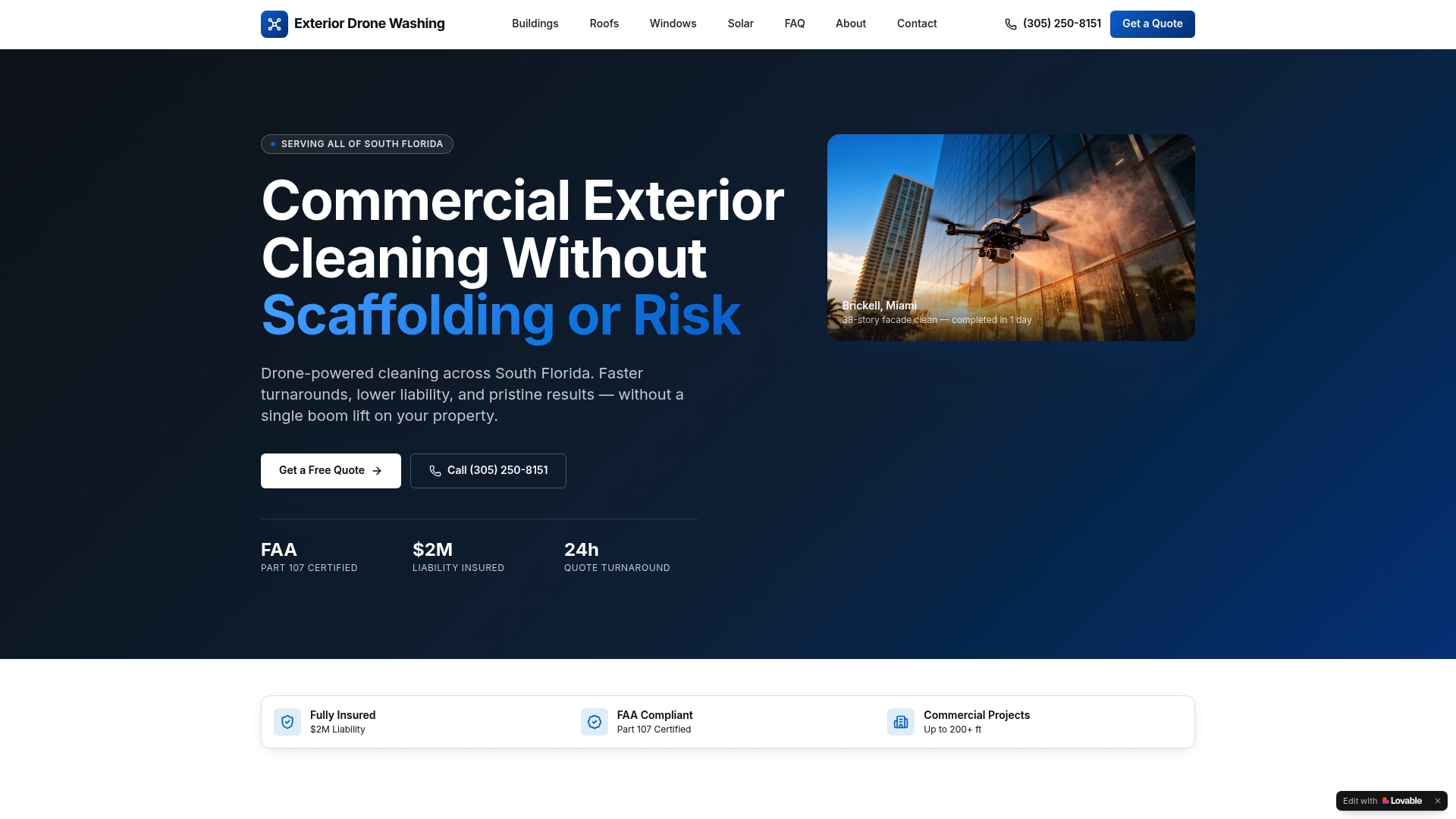
Exterior Drone Washing’s FAA Part 107 certified pilots clean facades, windows, roofs and solar arrays on commercial properties, using de-ionized water on glass, which reduces the detergent-discharge questions traditional wash methods raise. Because the drones work without scaffolding, lifts, or rope access, jobs finish faster with less tenant disruption and less worker-at-height exposure, two details that also shorten the story a facility team has to tell a LEED reviewer.
Ask for documentation upfront during procurement: certification copies, notes on how a job integrates with your SWPPP, and sample inspection or before-and-after logs from prior work. That paperwork should arrive before a contract is signed, not after a review deadline is looming. Visit the Exterior Drone Washing services page to request a quote and sample documentation for your next exterior cleaning project.
Sources
Consult the LEED v5 O+M rating system, EPA’s SWPPP guide, and Green Seal’s LEED v5 guidance directly when preparing a submission. A regulatory compliance guide can help map these federal rules to specific exterior washing scenarios, and the partner resource on sustainable design practices offers a broader look at integrating site stewardship goals.
- LEED v5 O+M (Site Management Policy) — USGBC
- Developing Your Stormwater Pollution Prevention Plan: A Guide for Industrial Operators — EPA
- LEED v5 rewards projects that use Green Seal-certified products & services — Green Seal
- Identifying greener cleaning products — EPA
FAQ
Is LEED certification still relevant for commercial buildings?
LEED remains the certification framework referenced by USGBC’s active v5 rating system, which continues to set requirements for site management, green cleaning, and related operational credits. Property managers pursuing sustainability recognition or tenant demand for green buildings still work through LEED’s current credit structure.
What is the procurement threshold for green cleaning products under LEED?
LEED v5 expects a defined share of eligible cleaning product spending, by cost, to come from products certified under accepted ecolabels such as Green Seal, UL EcoLogo, or EPA Safer Choice. Facility teams should tag invoices by product line so purchases can be verified against that threshold during review.
Can wash water from exterior cleaning go into a storm drain?
Wash water containing detergents, bleach, or other hazardous cleaning chemicals cannot be discharged to a storm drain under EPA’s Multi-Sector General Permit and SWPPP guidance. It must be captured or treated first, typically through containment, filtration, or licensed disposal.
Do drone-based cleaning methods help with LEED documentation?
Drone-based soft-wash methods using pure water can reduce or eliminate the wash-water discharge issues tied to detergent-based cleaning, simplifying the compliance story for a LEED submission. Vendors offering this service, including Exterior Drone Washing, typically provide before-and-after documentation that supports the inspection records LEED reviewers expect.