
Property Managers: High Rise Window Cleaning Cadence When Drones Help
· Exterior Drone Washing
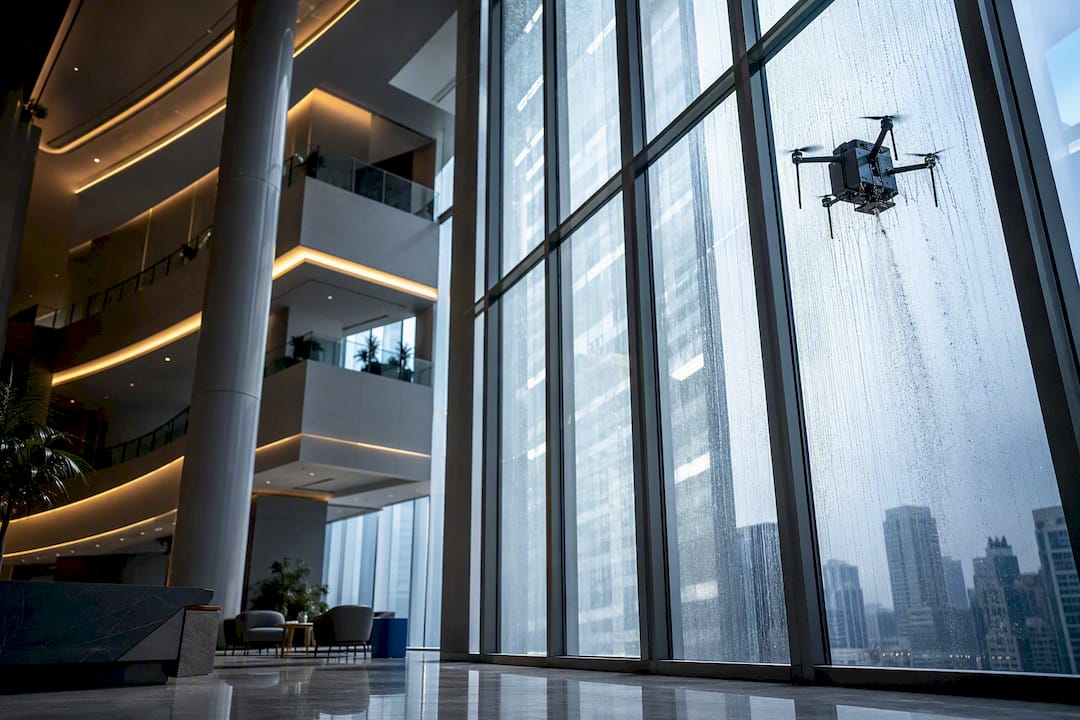
Most Class A high-rise office towers generally need exterior window cleaning several times per year, while standard commercial and residential high-rises typically follow a less frequent schedule. Interior and lobby glass usually needs attention far more often, sometimes weekly for entrance doors. Your actual number moves based on coastal exposure, tenant-facing image, and which access method your building can support.
TL;DR:
- Buildings near saltwater or busy roads may require cleaning more often than standard semiannual or quarterly schedules due to increased contaminants and residue buildup.
- Drone soft-wash systems can clean facades up to 320 feet without rigging, reducing worker height exposure and often shortening job durations to one day.
- Proper documentation of cleaning history and adherence to manufacturer and insurance maintenance requirements are essential to preserve warranties and avoid coverage issues.
- Access method choice impacts costs significantly, with drone cleaning and rope access typically offering more flexibility and potentially lower long-term expenses.
- Weather, tenant disruption concerns, and facade complexity should be considered when adjusting scheduled cleaning frequency or choosing between traditional and drone methods.
Table of Contents
- High-Rise Window Cleaning Frequency by Building Type
- What Changes Your Building’s Cleaning Schedule
- Budgeting and Scheduling a Recurring Program
- Access Methods, Safety, and What to Verify
- When Drone Cleaning Makes Sense
- Does Cleaning Frequency Affect Warranty or Insurance?
- A Property Manager’s Checklist for Contract Negotiation
- Is Drone Cleaning Right for Your Building?
- Sources
- FAQ
High-Rise Window Cleaning Frequency by Building Type
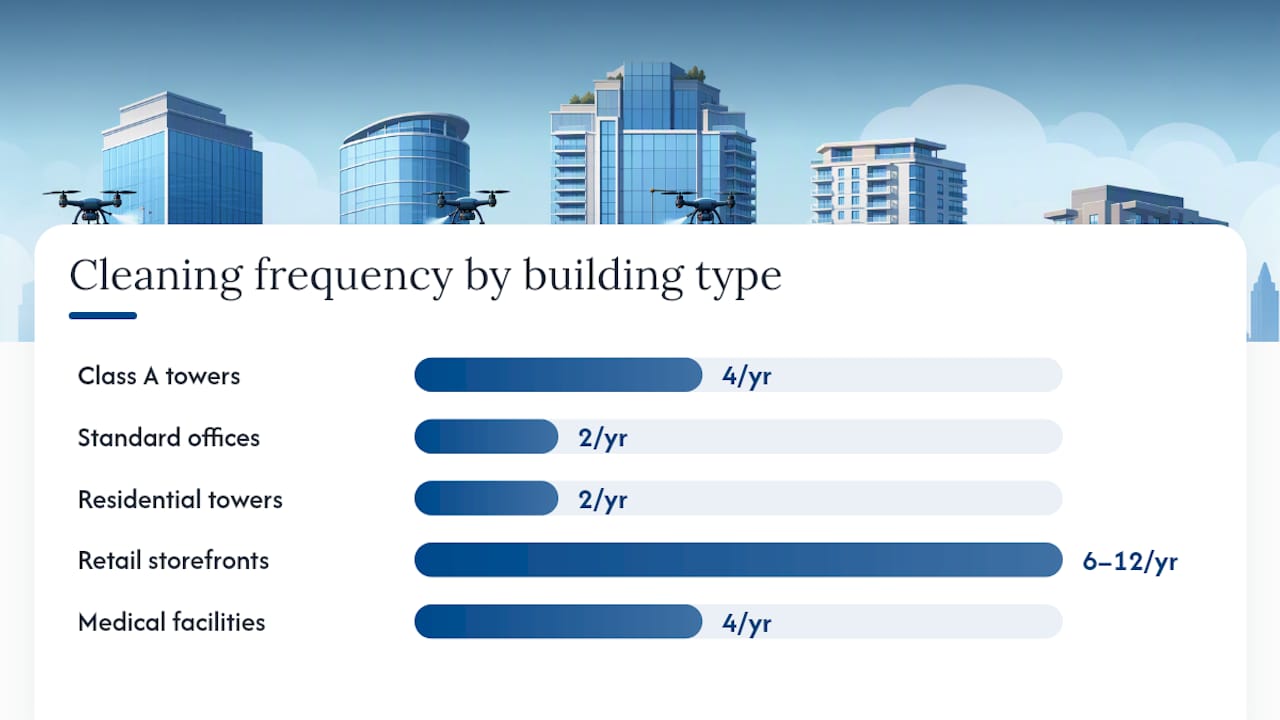
Frequency isn’t one-size-fits-all, and pretending otherwise is how buildings end up either overpaying or looking neglected. Industry guidance generally points to 2 to 4 exterior cleanings per year for high-rise and Class A office towers, with lower-tier commercial buildings stretching to once or twice annually.
Here’s how that breaks down by property type:
- Class A office towers: Quarterly exterior cleaning, per National Window Cleaning Authority guidance, since these buildings compete on curb appeal for premium tenants.
- Standard office buildings (Class B/C): Semiannual exterior cleaning covers most needs without straining maintenance budgets.
- Residential high-rises and condos: Semiannual works for most towers, though beachfront or downtown properties often need quarterly attention.
- Retail storefronts and street-level glass: Monthly to bimonthly, since ground-floor glass collects handprints, exhaust residue, and street grime far faster than upper floors.
- Medical facilities: Quarterly exterior, with interior glass cleaned on a stricter hygiene-driven schedule tied to infection-control protocols.
Interior and exterior schedules should be planned separately, since exterior cadence responds to weather and pollution while interior cadence follows occupancy and how the space is used, according to Binx’s maintenance planning guide. Lobby glass and entrance doors in high-traffic buildings often get cleaned weekly or biweekly, since fingerprints and smudges show up immediately to anyone walking through the door.
A quarterly calendar typically lands cleanings in March, June, September, and December, timed around pollen season and pre-holiday building presentation. A semiannual calendar usually runs spring and fall, skipping the harshest summer heat and winter storm windows when scheduling gets unreliable anyway.
What Changes Your Building’s Cleaning Schedule
Baseline numbers are a starting point, not a rule. Several variables push buildings toward more frequent service regardless of class or type.
- Coastal salt exposure: Buildings within a few miles of saltwater accumulate corrosive residue faster, often requiring quarterly cleaning even for otherwise semiannual properties.
- Urban pollution and traffic: Buildings near highways or industrial corridors collect diesel soot and road spray that etch into glass if left too long.
- Nearby construction: Active construction sites generate dust loads that can justify temporary monthly cleaning until the project wraps.
- Pollen and storm cycles: Spring pollen and post-storm debris are common triggers for adding an extra clean outside the normal rotation.
- Facade type: Curtain wall systems with low-e coatings need pH-balanced, non-abrasive cleaning to avoid coating damage, which can affect how often aggressive cleaning is safe to schedule.
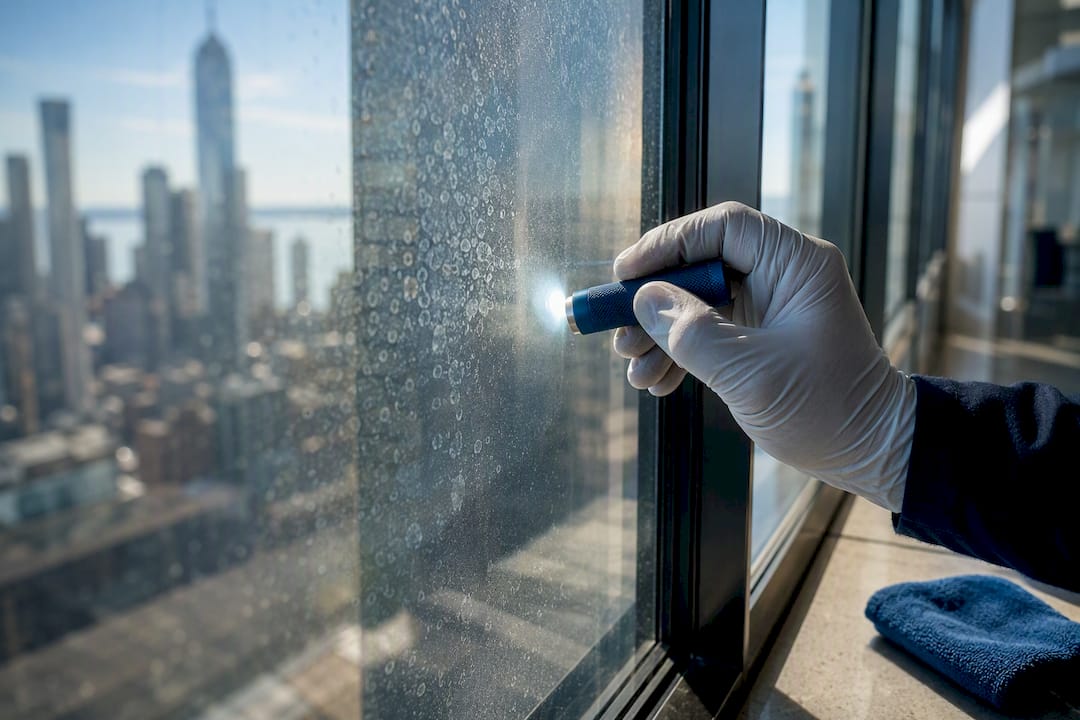
Pro Tip: Track mineral spotting and water staining after each cleaning cycle. If deposits reappear within six to eight weeks instead of the expected three to four months, your exposure level has likely changed and your schedule needs adjusting, not just your cleaning method.
Tenant and brand expectations matter too. A trophy office tower marketing itself on views and prestige cannot tolerate the same buildup a warehouse office park might absorb without complaint. When buildup has gone past routine grime into etched mineral deposits or coating degradation, you’re no longer looking at maintenance. That’s restoration work, and it costs more.
Budgeting and Scheduling a Recurring Program
Cost per pane depends heavily on access method, building height, and how much restoration work (versus routine cleaning) the job requires. Recurring contracts usually cost less per visit than one-off cleanings, since crews avoid repeat mobilization costs.
- Access method drives cost more than any other factor: rope access and swing stage cost more than boom lifts, while drone soft-wash often reduces labor hours for compatible facades.
- Height and pane count scale costs linearly for straightforward facades but jump sharply for complex geometry or hard-to-reach corners.
- Lead time matters: plan 6 to 8 weeks ahead for BMU scheduling or swing-stage setup to avoid rush premiums.
- Full-building jobs on a 200-foot tower typically run one to several days depending on access method and crew size.
Your contract should spell out cleaning frequency, a weather/reschedule policy, insurance minimums, and proof of current certifications before you sign anything.
Access Methods, Safety, and What to Verify
Method choice affects both cost and how often you can realistically schedule cleaning. Swing stages and suspended platforms handle most curtain-wall towers but require significant setup time. Rope access works well for complex facades with irregular angles. Boom lifts suit mid-rise buildings under roughly 10 stories. Drone soft-wash systems can clean flat and moderately complex facades up to 320 feet without rigging.
OSHA maintains searchable accident records for window-washer incidents, and any contractor you hire should follow OSHA fall-protection standards without exception. Before signing, ask for IWCA membership, documented rope-access training, and FAA compliance if drones are part of the proposal.
- Confirm current liability insurance and workers’ compensation coverage limits.
- Ask for OSHA fall-protection certification documentation, not just a verbal assurance.
- Request references from buildings of comparable height and facade type.
When a building’s access constraints make quarterly service logistically difficult (limited BMU availability, tenant disruption concerns, permit delays), semiannual becomes the more realistic default rather than an aspirational quarterly plan that keeps slipping.
When Drone Cleaning Makes Sense
Drone soft-wash systems using de-ionized water can clean glass and facades up to 320 feet without scaffolding, rope crews, or lane closures, according to Exterior Drone Washing’s service documentation. That speed advantage often shortens a multi-day job to a single day, and it removes workers from height entirely, which cuts the exposure OSHA’s incident data flags as the core risk in this trade.
- Verify FAA Part 107 compliance and current insurance before accepting any drone proposal.
- Ask for before-and-after documentation as part of the standard deliverable.
- Confirm the facade type suits drone access; complex geometry, interior atria, and heights beyond the operator’s tested envelope still need traditional methods.
Pro Tip: Request project timelines in writing when comparing drone bids against traditional access quotes. A same-day drone job versus a three-day rope-access job changes your tenant-disruption math significantly.
Does Cleaning Frequency Affect Warranty or Insurance?
Glass and facade manufacturers often attach maintenance requirements to their warranties, and skipping scheduled cleaning can quietly void coverage you assumed was still active. Curtain wall systems with sealant joints and low-e coatings are particularly sensitive: manufacturers frequently specify a minimum cleaning cadence and approved cleaning chemistry, and using the wrong pH or an unlicensed contractor can invalidate a warranty claim even if the actual damage came from something else.
Insurance carries a similar risk. Commercial property policies sometimes include maintenance clauses that assume routine upkeep, and a claim tied to water intrusion or facade failure can get contested if the building has no documented cleaning history. Keeping dated before-and-after records and signed service reports isn’t paperwork for its own sake. It’s the evidence you need if a manufacturer or adjuster questions whether the facade was properly maintained.
This is also where restoration versus maintenance distinctions matter for coverage. A one-off post-construction clean, as RBM Building Services notes, is typically treated as a separate service from your ongoing maintenance contract, and insurers may view it differently for liability purposes. Ask your contractor to document every service with dated photos and keep that file alongside your warranty paperwork, not buried in a separate maintenance folder nobody checks until there’s a dispute.
A Property Manager’s Checklist for Contract Negotiation
Prioritize documented safety and proof over the lowest bid. Require before-and-after photos on every job, not just the first one. Start with a baseline schedule (quarterly for Class A, semiannual otherwise), then reassess after a full year against actual buildup patterns.
Negotiate weather and reschedule terms upfront, and cap add-on charges before signing. A vague contract costs more than a slightly higher line-item price ever will.
— Eliot
Is Drone Cleaning Right for Your Building?
Exterior Drone Washing provides drone-based soft-wash cleaning for facades, glass, roofs and solar arrays on commercial properties, flown by FAA Part 107 certified pilots using de-ionized water systems. For facades within reach, up to 320 feet (about 29 stories) per staging position, with reasonably flat or moderately complex curtain-wall facades, this method typically means faster turnaround and no scaffolding or lift rigging blocking tenant entrances or parking.
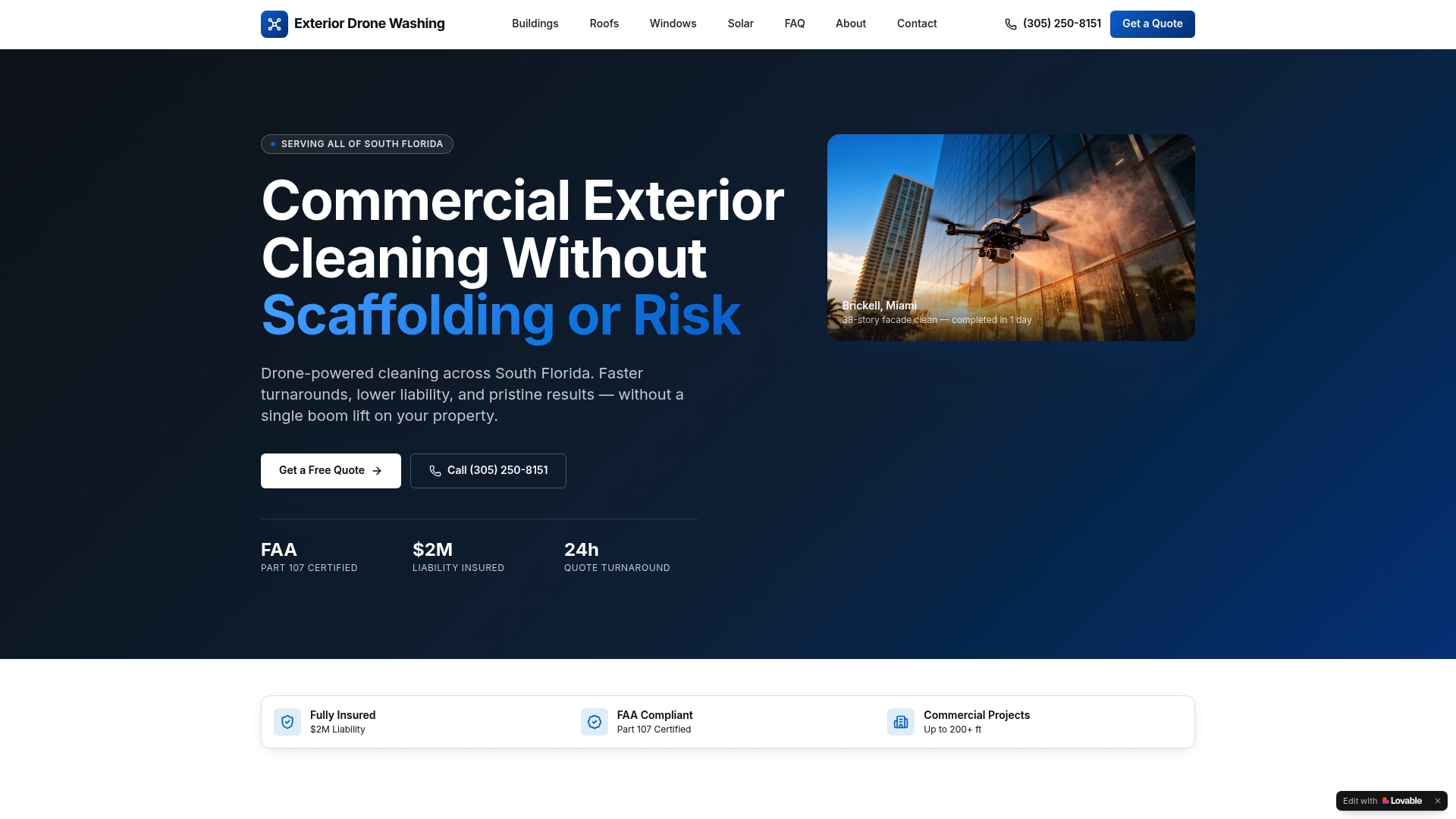
Screening for fit is quick: check your building’s height against the drone’s operational ceiling, confirm your facade doesn’t have deep architectural recesses that need hands-on rope access, and factor in whether avoiding tenant disruption during business hours matters to your board or ownership group. Buildings with solar arrays can often bundle panel cleaning into the same visit, which simplifies scheduling further.
If your property matches that profile, request a site assessment through Exterior Drone Washing to get a scoped quote and proposed timeline before your next cleaning cycle comes due.
Sources
Reference OSHA’s accident data, the National Window Cleaning Authority, and the IWCA for frequency and safety standards.
- OSHA accident search: “Window Washer”
- Commercial Window Cleaning Cost & Frequency Guide (2026)
- Recommended window cleaning frequency for commercial buildings — National Window Cleaning Authority
FAQ
How often should high-rise windows be cleaned?
Most Class A towers need quarterly exterior cleaning, while standard commercial and residential high-rises typically do well on a semiannual schedule. Coastal exposure, pollution levels, and tenant expectations can push either building type toward more frequent service.
How safe is high-rise window cleaning?
Traditional rope access and swing-stage work carry real fall risk, which is why OSHA maintains dedicated incident records for this trade and requires strict fall-protection compliance. Drone-based cleaning removes workers from height entirely for compatible facades, which eliminates that specific risk category.
What is the best way to clean high-rise windows?
The best method depends on facade complexity, building height, and how much tenant disruption you can tolerate. Rope access and swing stages handle intricate geometry well, while drone soft-wash systems work efficiently on flatter facades up to 320 feet, often with less disruption and faster timelines.
Does skipping a cleaning cycle affect my warranty?
Many glass and facade warranties specify minimum maintenance requirements, and skipping scheduled cleanings or using non-approved chemicals can void coverage. Keep dated before-and-after documentation for every service so you have proof of maintenance if a warranty or insurance claim ever comes into question.