
Building Owners: Standards Backed Aluminum Composite Panel Cleaning
· Exterior Drone Washing

The safest first step for aluminum composite panel cleaning is a soft wash: rinse the surface, apply a mild pH-neutral detergent with a soft cloth or brush, then rinse thoroughly from top to bottom. Skip anything abrasive and keep pressure washers at a safe distance and low setting. Heavy oxidation, pitting, or panels that cannot be reached from the ground call for a professional crew.
TL;DR:
- Regular cleaning with a soft cloth and a mild pH-neutral detergent is enough for most aluminum composite panels, especially when done in shaded conditions.
- Heavier oxidation or chalking typically requires professional restoration rather than routine cleaning, and deep stains may need specialized treatments, not simple washing.
- Surface inspections should include dark-cloth tests and small patch spot tests before full cleaning to prevent damage and confirm the method’s effectiveness.
- High-rise or hard-to-reach facades can be cleaned safely and efficiently using soft-wash drones flown by FAA Part 107 certified pilots that apply de-ionized water, avoiding scaffolding and rope access.
- Cleaning frequency should correspond with environmental exposure, from once a year in low-pollution areas to several times annually in coastal or industrial zones.
Table of Contents
- Step-by-step method for cleaning aluminum composite panels
- Which cleaners are safe, and which will damage the finish
- How often should you clean aluminum composite panels?
- Treating stains: droppings, grease, rust, graffiti, and chalking
- Inspection, spot testing, and knowing when cleaning won’t fix it
- Choosing safe access methods and equipment
- What a qualified drone soft-wash contractor should offer
- Cleaning as preventive maintenance, not a cosmetic fix
- Exterior Drone Washing: a practical option for facade cleaning
- Sources
- FAQ
Step-by-step method for cleaning aluminum composite panels
Start on a mild, overcast day if you can. Direct sun speeds evaporation and leaves streaks, and the Arconic technical bulletin on cleaning recommendations recommends working in cool or shaded conditions for this reason. Cover nearby landscaping, signage, and glass before you begin, since runoff carrying detergent or grime can stain porous materials below.
- Rinse the panel with clean water to remove loose dust, pollen, and grit before any detergent touches the surface.
- Mix a mild, pH-neutral detergent at the dilution your cleaner’s label specifies, typically a light concentration in a bucket of water rather than a full-strength pour.
- Wash with a soft cloth, lambswool mitt, or soft-bristle brush, working top to bottom so dirty runoff never re-soils a section you already cleaned.
- Rinse immediately and thoroughly. Do not let detergent sit and dry on the panel, since residual chemical film can degrade the coating over time.
- Dry with a squeegee or soft towel in spots prone to streaking, such as under sealant joints or flashing.
Before tackling a full facade, run a small patch test in an inconspicuous corner and check it after 24 hours for discoloration or dulling.
Pro Tip: Do not let detergent dry on the panel. If a stain does not lift, stop and follow the panel manufacturer’s stain guidance rather than leaving the cleaner on longer.
Which cleaners are safe, and which will damage the finish
Mild, pH-neutral detergents diluted according to the manufacturer’s instructions are the right starting point for nearly every routine cleaning job. Alucobond’s own guidance points in the same direction: regular cleaning with a mild detergent solution, always preceded by a spot test on a hidden area.

For grease or oil that will not lift with detergent alone, isopropyl alcohol mixed 1:1 with water is an option for small areas, per Alucobond’s instructions, provided you test first and rinse promptly. Solvent-based cleaners are a last resort for stains that will not respond to water-soluble methods, and manufacturers are explicit that testing comes before general use.
Avoid these entirely:
- Steel wool, scouring pads, or any mechanical abrasion, which the Arconic bulletin flags as a direct risk to the finish.
- Acetone on painted panels, which manufacturers specifically warn against.
- Concentrated acids or alkalis that can etch coatings or corrode aluminum.
- High-pressure jets held close to the panel surface, which can force water behind joints and strip finish.
- Mixing bleach and ammonia-based products together under any circumstances, since the combination produces dangerous fumes.
Following AAMA’s cleaning guidance reduces the risk of finish damage on architectural aluminum, according to the AAMA 609 & 610 standard, which sets out accepted methods and materials for painted and anodized aluminum. Wear gloves and eye protection when working with any solvent or concentrated detergent, and contain runoff so it does not enter storm drains or landscaped beds untreated.
How often should you clean aluminum composite panels?
Cleaning frequency should track the environment a building sits in, not a fixed calendar. Qualicoat’s care recommendations set annual cleaning as the baseline for normal environments, increasing to more frequent cleaning for buildings in marine, coastal, or industrial settings.
- Low-pollution suburban or inland sites: once a year is typically sufficient.
- Urban commercial buildings with traffic exhaust and general grime: twice a year.
- Coastal, marine, or industrial exposure with salt spray or airborne particulates: several times a year.
Pairing panel cleaning with scheduled window washing or seasonal maintenance walkthroughs keeps the work from falling off the calendar. Heavy bird activity, nearby construction dust, or a new industrial neighbor are all triggers to move up the next cleaning regardless of where you are in the cycle. Keep a simple log with dated photographs of representative panel sections so you can compare wear over time and catch early signs of coating breakdown before they become expensive.
Treating stains: droppings, grease, rust, graffiti, and chalking
Different stains call for different tactics, and using the wrong one can drive a mark deeper into the finish instead of lifting it.
- Bird droppings: dampen the area first rather than scraping it dry, then wash with mild detergent and rinse. Scraping while dry can scratch the coating and grind acidic residue into the surface.
- Grease and oil: start with mild detergent. For hardened deposits, an aluminum-safe degreaser can help, but spot-test it first since some degreasers are too aggressive for painted finishes.
- Rust bleed: use a rust remover formulated as safe for coated aluminum, and mask off adjacent materials so the remover does not splash onto surfaces it was not designed for.
- Graffiti and marker: isopropyl alcohol is worth testing on a hidden section first. Avoid aggressive paint strippers on PVDF-coated panels, since they can strip the resin along with the marker ink. Buildings in graffiti-prone areas sometimes add anti-graffiti window film to glazing and low-reach panels as a preventative layer.
- Oxidation and chalking: run a dark-cloth test, rubbing a clean dark cloth across the surface. Powder transfer onto the cloth confirms chalking, a sign of PVDF resin breaking down, according to Virgo ACP’s maintenance guide. Light chalking often responds to cleaning, but deep, widespread chalking usually signals that restoration, not cleaning, is the real fix.
Inspection, spot testing, and knowing when cleaning won’t fix it
A five-minute inspection before you commit to full-scale cleaning saves hours of rework later.
- Run the dark-cloth test across a few representative panels to gauge how far chalking has progressed.
- Try your chosen cleaner on a small, hidden patch and note the dwell time, dilution, and result before scaling up.
- Build a small mockup on a section of facade to confirm the method works before crews move to the rest of the building, a practice supported by field guidance on aluminum maintenance.
- Watch for coating failure, pitting, or exposed composite core underneath the finish, all signs that cleaning alone will not restore appearance.
- Photograph and date every mockup and inspection so you have a record to support warranty claims or procurement decisions later.
Pro Tip: Photograph your mockup panel next to an unwashed section under the same lighting. Side-by-side proof settles disputes with contractors or ownership faster than a written description ever will.
Choosing safe access methods and equipment
Weather and panel temperature matter more than most crews expect. Avoid cleaning when panels are hot to the touch, generally above 40 degrees Celsius, since heat speeds evaporation and can bake detergent residue into the finish before you rinse it off.
- Traditional access options include boom lifts, scaffolding, and rope access, each with its own setup time, cost, and worker-at-height risk.
- Drone-based soft-wash systems offer a faster, lower-risk alternative for facades that are difficult or costly to reach with a lift or scaffold.
- Fall protection and PPE are non-negotiable for any crew working at height, regardless of the method chosen.
- Contain runoff with tarps or barriers to protect landscaping, hardscaping, and parked vehicles below the work zone.
- If you do use a pressure washer, keep it at low pressure and a safe standoff distance from the panel, following the equipment and panel manufacturer’s guidance.
What a qualified drone soft-wash contractor should offer
Not every job needs a professional crew, but high-rise facades, advanced oxidation, hard-to-reach sections, and warranty-sensitive coatings usually do.
- Ask whether the contractor follows manufacturer cleaning methods and can cite the standard or bulletin behind their process.
- Confirm insurance coverage and a documented safety plan before any equipment goes up.
- Look for a written mockup and test protocol rather than a crew that jumps straight to full-scale cleaning.
- Check that the proposal includes material protection measures for landscaping, glazing, and adjacent surfaces.
Drone soft-wash systems, which apply de-ionized water at controlled pressure from a drone flown by an FAA Part 107 certified pilot, remove the need for scaffolding or rope access on most facades and can materially cut both worker-at-height exposure and project timelines on tall or hard-to-reach facades. A proposal worth signing should spell out the method statement, the mockup result, the protection plan for surrounding areas, and before-and-after documentation of the completed work.
Pro Tip: Request the mockup photos in writing before signing a full-building contract. A contractor confident in their method will have no problem sharing them.
Cleaning as preventive maintenance, not a cosmetic fix
Routine cleaning is cheaper than the alternative: replacing panels once oxidation, pitting, or coating failure sets in. PVDF-coated panels can hold their appearance for 20 to 25 years with planned cleaning, a design life that shrinks fast when maintenance gets treated as optional. Building owners who fold panel cleaning into an existing maintenance contract, alongside regular facade upkeep, tend to spend less over the life of the building than those who wait until staining or chalking becomes visible from the street.
— Eliot
Exterior Drone Washing: a practical option for facade cleaning
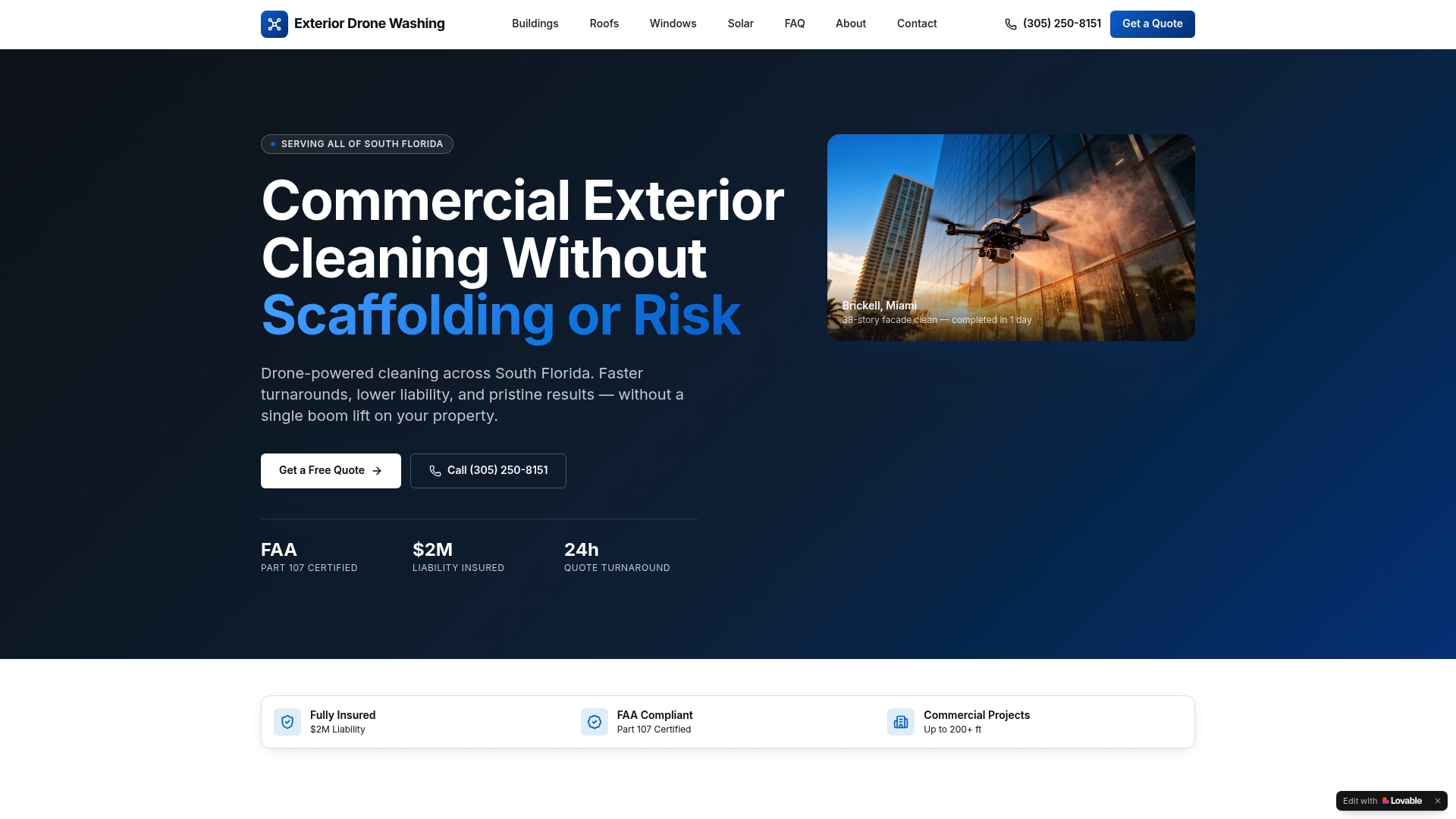
Property managers who need a facade cleaned safely, without shutting down entrances or renting a lift for a week, have a faster route: drone soft-wash service. Exterior Drone Washing uses industrial drones flown by FAA Part 107 certified pilots with de-ionized water and soft-wash application to clean building facades, glass, roofs, and solar arrays up to 320 feet (about 29 stories) per staging position, without scaffolding or rope access and with little tenant disruption.
A typical engagement includes:
- A free site survey of panel condition and access, followed by a fixed price.
- A test section where the finish or soiling calls for one.
- A written method statement and insurance documentation for your files.
- Before-and-after photos on request.
Commercial property managers, HOA boards, and building owners can get a quote through the drone facade cleaning service page or start with the main services page to discuss scope and scheduling.
Sources
- Cleaning recommendations technical bulletin (Arconic AAP)
- Recommendations for the care of Coated Aluminium (Qualicoat)
FAQ
How do I clean aluminum composite panels?
Rinse the panel first to remove loose dirt, then wash with a mild pH-neutral detergent using a soft cloth or brush, working top to bottom. Rinse thoroughly right away so no detergent residue dries on the surface.
How do you make oxidized aluminum look new again?
Light oxidation often improves with a thorough soft wash using a mild detergent and soft cloth. Heavier chalking, confirmed with a dark-cloth test that shows powder transfer as described by Virgo ACP, usually needs professional restoration rather than routine cleaning.
What should you not clean aluminum with?
Avoid steel wool, scouring pads, and any abrasive pad, along with acetone on painted panels and concentrated acids or alkalis. High-pressure jets held close to the surface and mixing bleach with ammonia-based cleaners are also risks the Arconic bulletin and general safety practice both warn against.